The Law Applies Equally to Those in Power, Politicians, Public Officials and Ordinary Citizens – Minister of Justice
The law applies equally to those in power, politicians, public officials and ordinary citizens, and this principle must always be remembered, stated Minister of Justice and National Integration, Attorney-at-Law Harshana Nanayakkara.
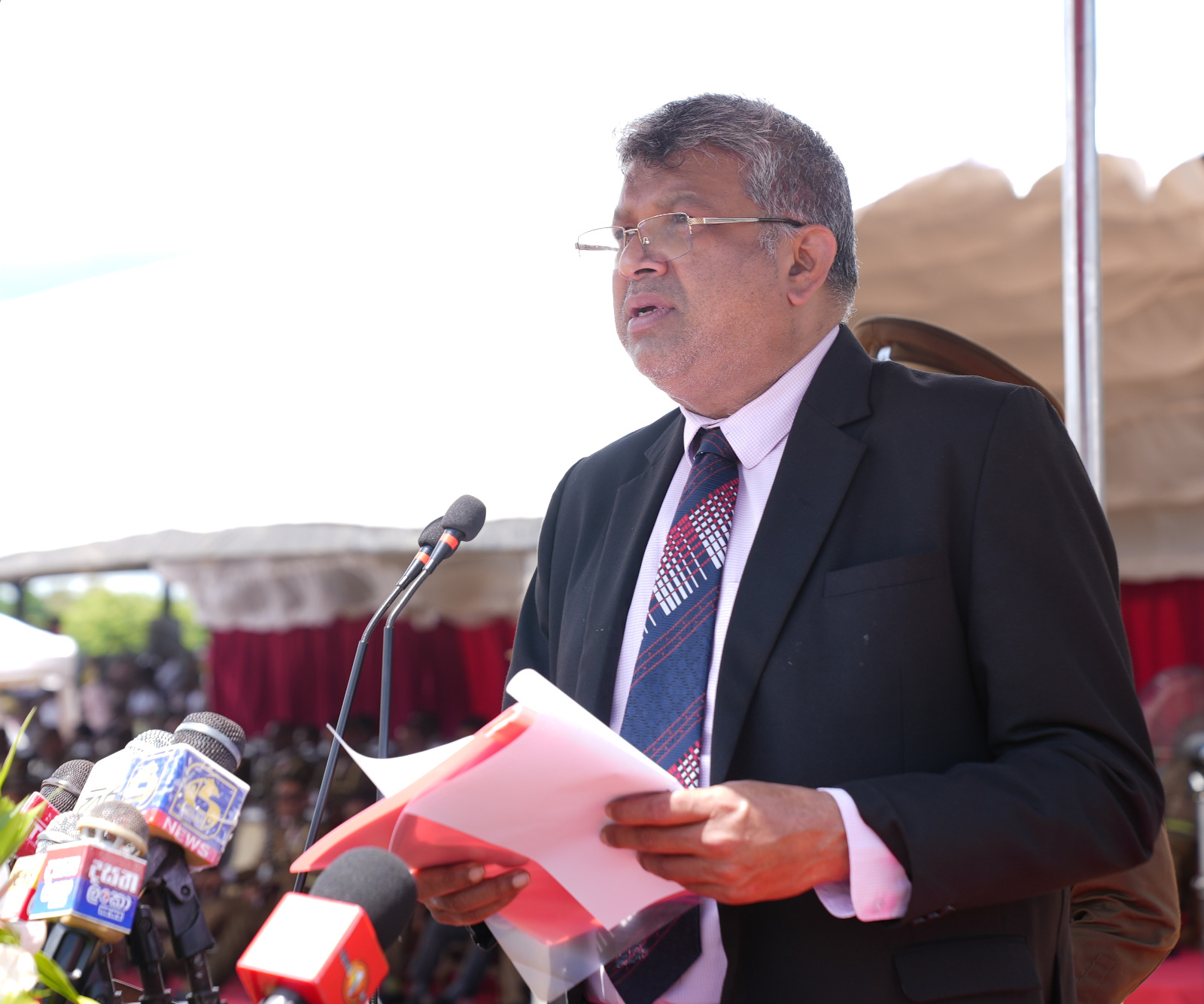
The Minister made these remarks while participating as the Chief Guest at the passing-out ceremony of officers who successfully completed the 13th Apprentice Second Grade Jailors’ Training Course and the 105th Apprentice Warders’ Training Course, comprising a total of 265 recruits, conducted by the Department of Prisons.
The passing-out ceremony and parade of the apprentice officers were held this morning (19) at the Training Institute Grounds of the Agunakolapelessa Prison. A total of 37 apprentice jailors, 05 female apprentice officers, 197 apprentice warders and 25 female warders passed out at the ceremony.
Following the inspection of the passing-out parade, Minister of Justice and National Integration Harshana Nanayakkara addressed the officers of the Apprentice Jailors’ Course and the 105th Apprentice Warders’ Training Course and stated,
“I extend my heartfelt congratulations to all of you who are joining the respected public service. I also express my gratitude to the parents who have presented your sons and daughters to the Prison Service. You must remember that it is your responsibility to conduct yourselves in a manner that brings honour and dignity to both yourselves and your families.
Who is a prison officer? Is a prison officer merely someone who walks behind a prisoner, closes and locks a door, and ensures security? No. As a prison officer, you are undertaking a much greater responsibility.
You are the guardians who stand between the law and humanity. The person standing before you may have violated the law, and the law must be enforced in relation to that person. However, that does not mean that the person ceases to be a human being.
It is also the responsibility of the Prison Service to provide an opportunity for a person who has become socially isolated, taken the wrong path, or made a wrong decision at some point in life to rebuild a better life. That is an opportunity you are entrusted with today.
Only a limited number of people in society are granted the lawful authority to guide individuals towards the right path. Therefore, you should not view your duty merely as ‘guarding’. You should see yourselves as individuals who help guide a human being back towards a better path in life. That is where the true dignity of your profession lies.
There is a fundamental principle that all of us in the public service must remember, the law is equal for everyone. It applies equally to those in power, politicians, public officials and ordinary citizens.
The rule of law does not mean having one law for those who possess power and another law for those who do not. It means that the law is applied equally to everyone. That belief is a fundamental foundation for building public confidence in state institutions.
Therefore, what you need is not political connections or influence. What you need is faith in the law and integrity in carrying out your duties. The uniform you assume today is a symbol of that responsibility.
There is another important principle we must remember. When a crime is committed, the law must be enforced. That is essential. However, a society’s problem of crime cannot be solved through punishment alone. Prison policy must go beyond punishment and encompass correction, rehabilitation and reintegration into society.
A person may end up in prison not merely because of an individual wrongdoing, but also as a result of shortcomings that have existed within the socio-economic system over a long period. We cannot make prisons places of reform without addressing the broader issues within society.
Instead of allowing a person leaving prison to return to circumstances that lead them back into crime, it is important to provide them with the skills and opportunities necessary to rebuild their lives.
Provisions have already been made for vocational training programmes through which inmates can obtain NVQ qualifications. We have also begun working with the private sector to provide employment opportunities and create opportunities for inmates to establish their own sources of income.
Various programmes are also being implemented to identify and develop the hidden talents of inmates.
One of the challenges before us is prison overcrowding. Overcrowding is not merely a problem confined to the four walls of a prison. It affects the human dignity of inmates, their health, the safety of prison officers and the quality of prison operations.
Therefore, there is no single solution to this problem. We have to address it simultaneously from multiple perspectives. Accordingly, the powers of pardon vested in the President, existing precedents and relevant legal frameworks are being reviewed.
Proposals have also been put forward to amend the Community-Based Corrections Act and to give greater priority to the reintegration and rehabilitation of offenders rather than focusing solely on punishment.
These proposals include the construction of new prison facilities, expansion of existing prisons and the development of necessary temporary facilities.
We expect integrity from you. We expect discipline. We expect respect for the law. At the same time, it is our responsibility to provide you with a fair working environment. You must have the required staff. There must be opportunities for professional advancement, and your welfare must be protected.”
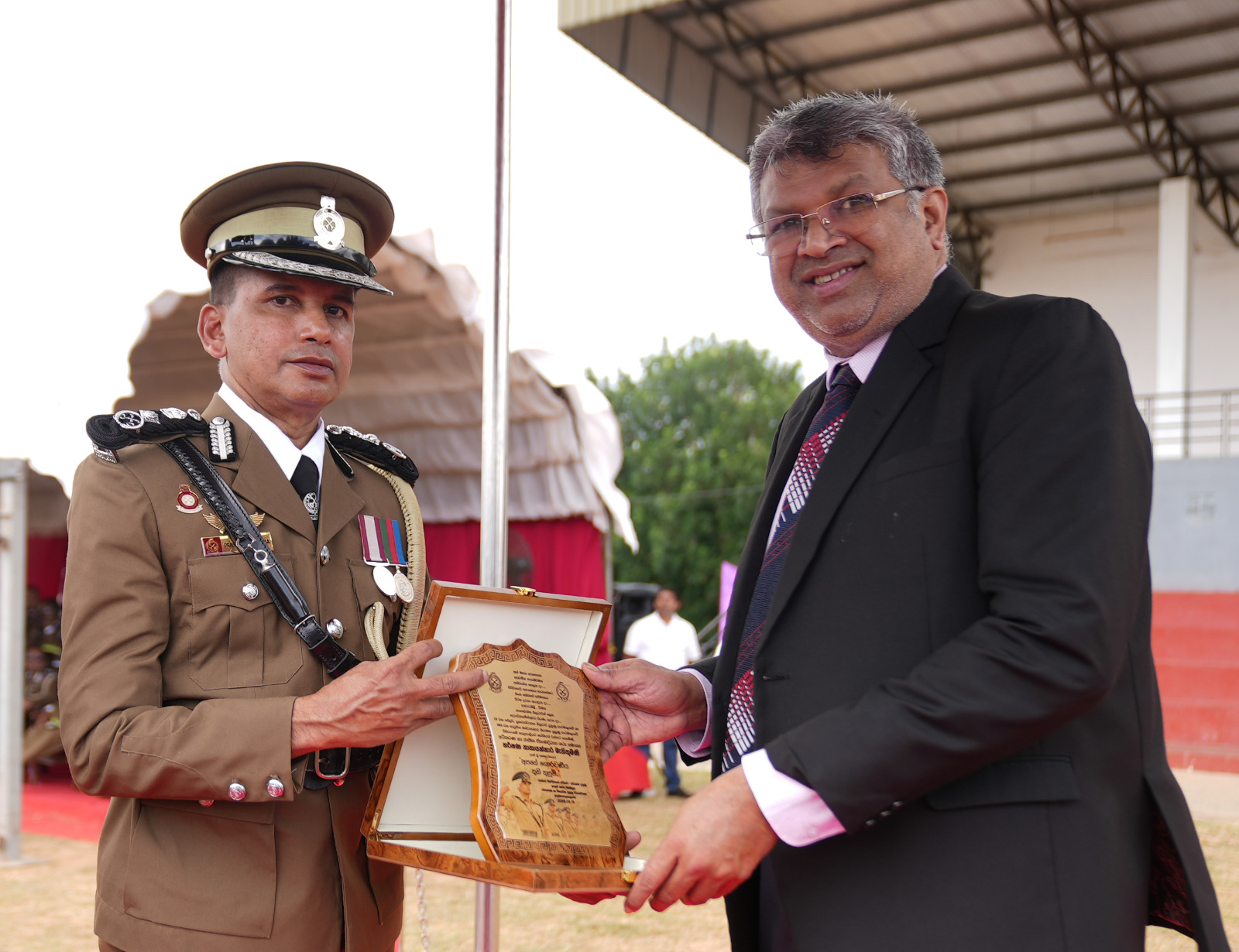
At the ceremony, E.R. Rasika Sumedha was awarded the title of Best All-Round Warder of the 105th Apprentice Warders’ Training Course, H. Kavisha Devindi was awarded the title of Best All-Round Female Warder, and E.R.R. Avishka Bandara was awarded the title of Best All-Round Second Grade Jailor. The awards were presented by the Minister.
The ceremony was further enhanced by a drill display, cultural performances and several other events.
Commissioner-General of Prisons Prasad Hemantha Kumara Commissioners of Prisons, Superintendents of Prisons, Assistant Superintendents of Prisons, former Commissioners of Prisons, as well as the parents and relatives of the officers of the Apprentice Jailors’ Course and the 105th Apprentice Warders’ Training Course, participated in the occasion.